Archives
WORLDS Lightbox series
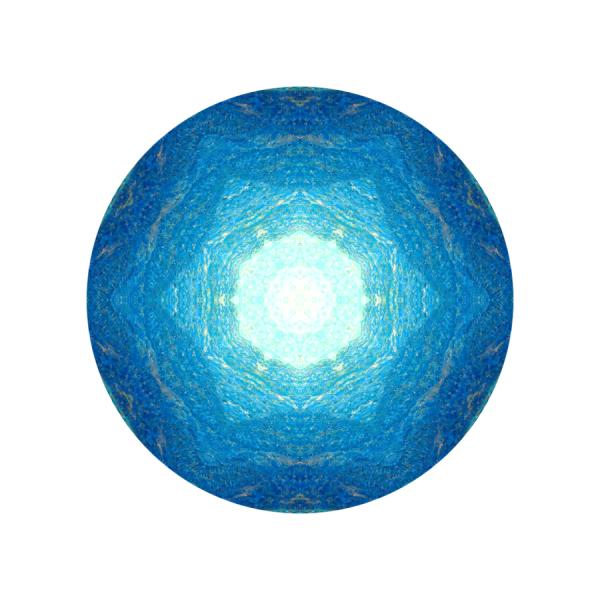
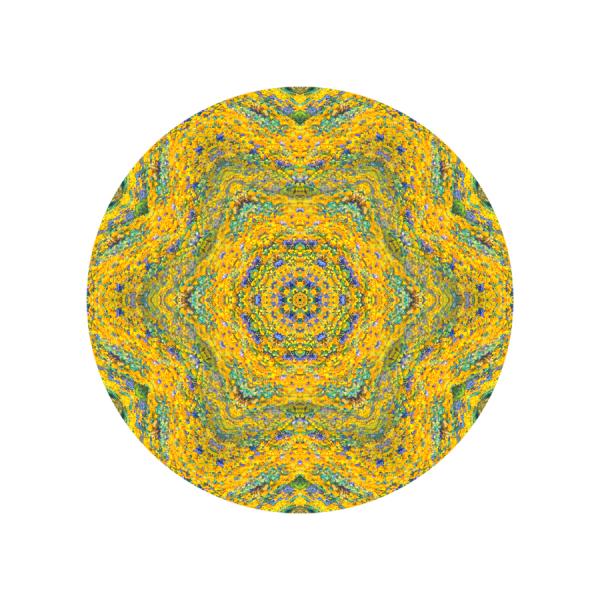
Josh is a multi-disciplinary headache, compulsively chasing whatever creative medium catches his attention. Drawing on the strange, joyful and sometimes lonely experience of growing up queer in the '90s and early 2000s, his work explores nostalgia, identity and the hope of becoming the person you once needed.
About the art:
WORLDS is an ongoing series of artworks that explore the worlds that emerge whenever two people form a meaningful connection. Built from shared experiences, borrowed phrases and collective memories, these worlds become places we return to throughout our lives.
CONTACT
Instagram @iamworkinghard
Images
Josh Naus, Salt Worn Ever Reaching, Digital Print on Hahnemuhle Photo Rag, 2026
Josh Naus, Sunkissed Everlasting, Digital Print on Hahnemuhle Photo Rag, 2026
Leo O'Malleys
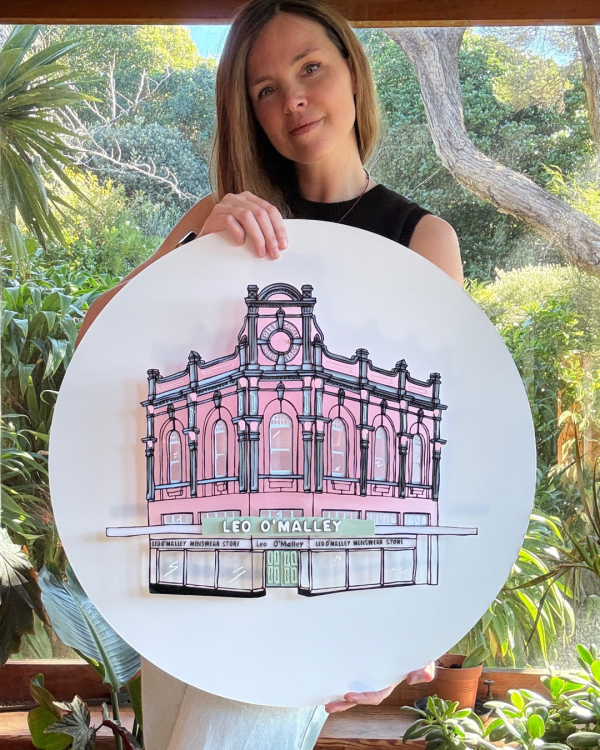
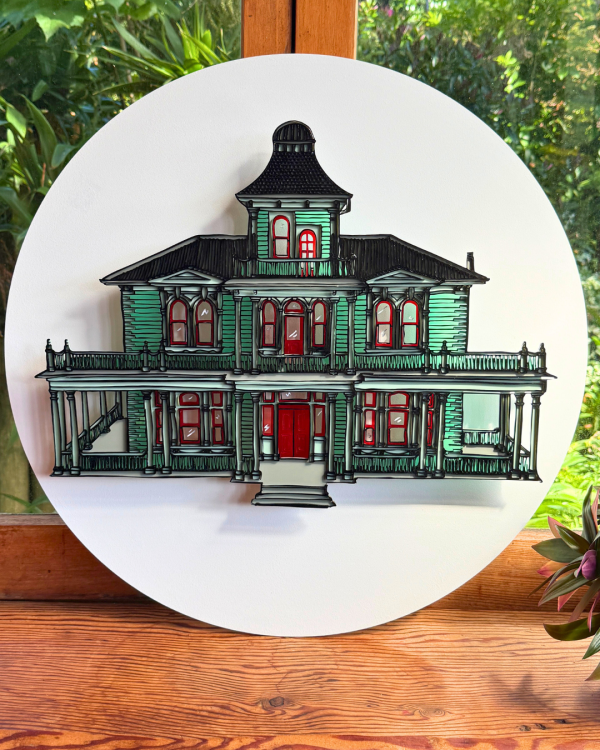
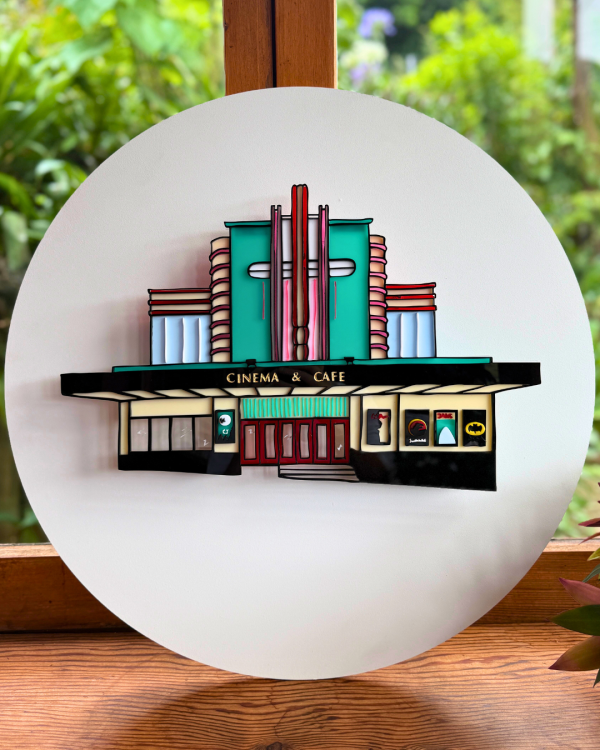
Stacey’s acrylic sculptures are a love letter to place, intricate architectural portraits reimagined through finely detailed layers of cut linework. Each piece begins as one of her hand-drawn illustrations, rooted in observation and nostalgia, before being carefully translated into sculptural form. The result is delicate yet bold, with streetscapes and beloved buildings suspended in negative space, their windows, rooftops and subtle quirks immortalised in light, shadow and colour.
Worked to be shown:
- Antrim House
- The Penthouse Cinema
- Leo O'Malley
Wellington-based artist Stacey Fraser-Allen creates vibrant, playful, and nostalgic works inspired by New Zealand’s culture and architecture. Her art celebrates the memories tied to homes, places, and communities — the spaces that shape who we are.
Winner of the Emerging Artist of the Year Award at Art in the Park 2024, Stacey returns in 2026 with a bold new body of work. Alongside her well-loved illustrations, she is debuting acrylic sculptures that bring her drawings to life in a new way. These layered sculptures play with light and shadow, their reflections casting drawings onto the wall behind and inviting viewers to experience her stories from a fresh perspective.
Stacey also takes on bespoke commissions and commercial collaborations, working with clients to turn their meaningful spaces and memories into lasting works of art.
Images
Stacey Fraser-Allen, Leo O'Malley, acryllic, 16 June - 1 July 2026
Stacey Fraser-Allen, Antrim House, acryllic, 6 - 20 May 2026
Stacey Fraser-Allen, The Penthouse Cinema, acryllic, 20 May - 3 June 2026
CONTACT
Brick and Water Creative | Facebook | Instagram | Website | Email
City Loops
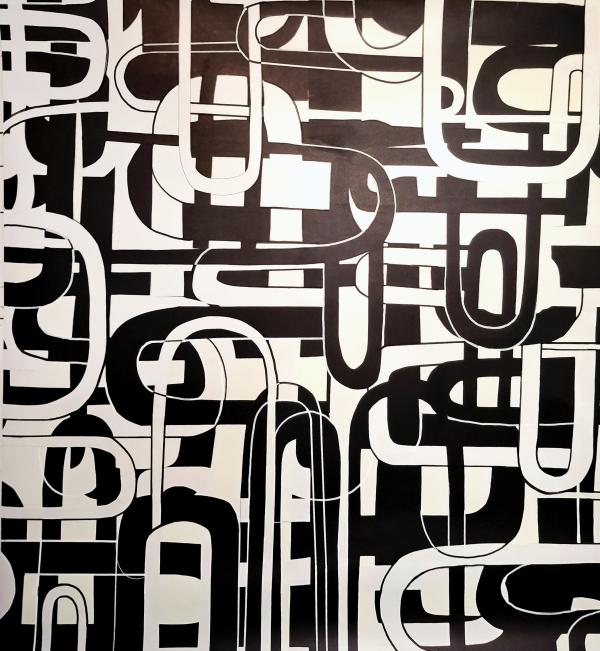
Emily Harris is a Wellington based artist. She develops her works using layered paper collage and drawn line, using repetition to create depth and balance.
Making Waves
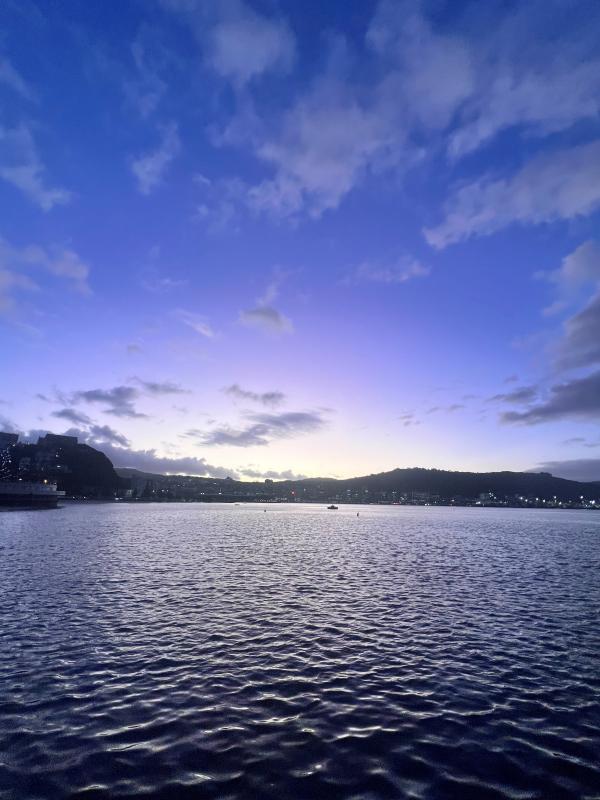
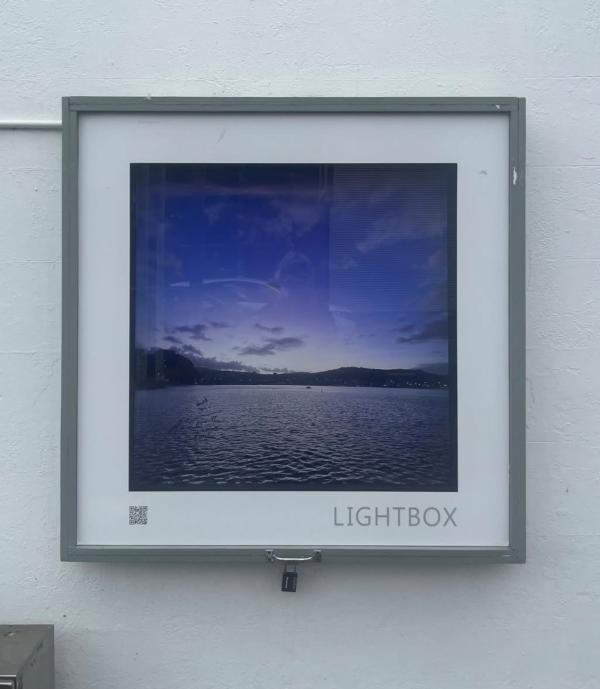
My name is Ava Birkinshaw Janes, I am currently a Year 13 student at Wellington girls college. What inspired me to take a photo of the Wellington waterfront was because of it’s beautiful colours and lighting.
The photo is of the Wellington waterfront on a light day, my favourite part of the photo is how the waves rise up to the sky.
Sowing solidarity with Te Tiriti o Waitangi
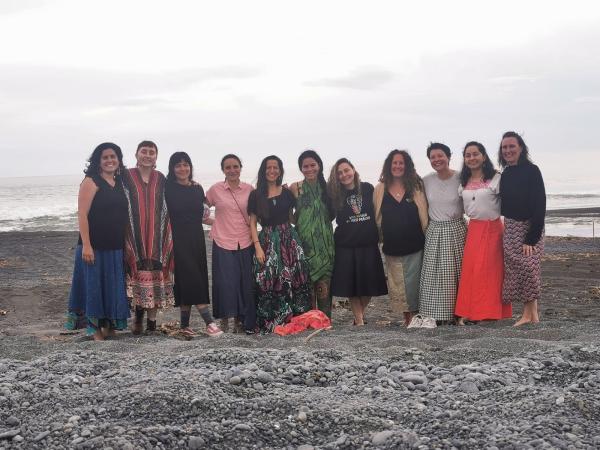
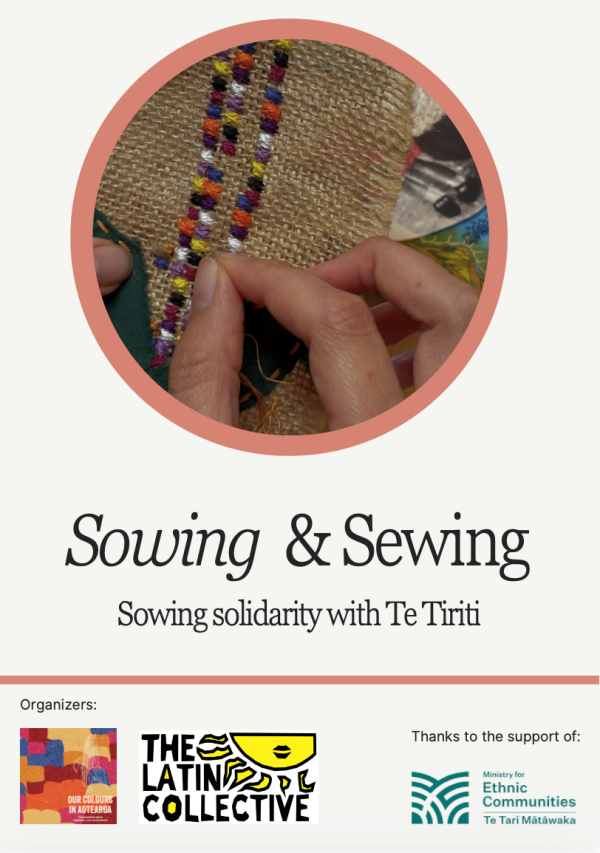
Sowing and Sewing is a textile-based exploration of what it means to stand in solidarity with Te Tiriti o Waitangi as Latin American tauiwi in Aotearoa.
In February 2025, a group of Latin American women gathered at Kohunui Marae to learn about Te Tiriti. During our noho marae, we shared a bit of our history from the places we were born and the stories carried by our ancestors. We also traced parallels between the colonial history of our places of origin and the history of Aotearoa.
Over the following months, we worked with a creative framework that invited us to reflect on the things, places and stories that shaped us. We created textile pieces about what ground us and give us a sense of who we are: our land, people, food, stories, memories and yearnings. Through this process, we understood that by being able to see what is precious to us, it is easier to recognize what is precious to others. For us, engaging with Te Tiriti is about learning how to live in Aoteraoa under values of care and
reciprocity, honouring what is taonga to tangata whenua and supporting tino rangatirantanga.
We then turned our work toward the question of how we might live these commitments in practice: the value that guide us, the responsibilities we carry,and the legacies we hope to leave as future ancestors.
These pieces here are the result of this work. Rather than reaching neat conclusions, this project has been about deepening our understanding of ourselves and the ways we can connect with Te Tiriti. The work of sowing, then, continues: Planting the seeds of solidarity, relationship and care across differences.
ABOUT THE ARTISTS
Sowing and Sewing, Sembrar y Coser, is a group of Latin American women living in Aotearoa, who through textile and collaborative art, have been exploring our connections to and responsibilities from Te Tiriti o Waitangi as racialised tauiwi.
We are mothers, students, workers, activists, teachers and volunteers… and much more. We have been in Aotearoa for over two decades, or only a few years. We come from diverse geographies and communities, and have had different trajectories of migration.
This project has been possible thanks to the work of OCA, Our Colours in Aotearoa, and The Latin Collective, as well as funding from the Ministry of Ethnic Communities.
Sowing and Sewing: Sowing solidarity with Te Tiriti o Waitangi
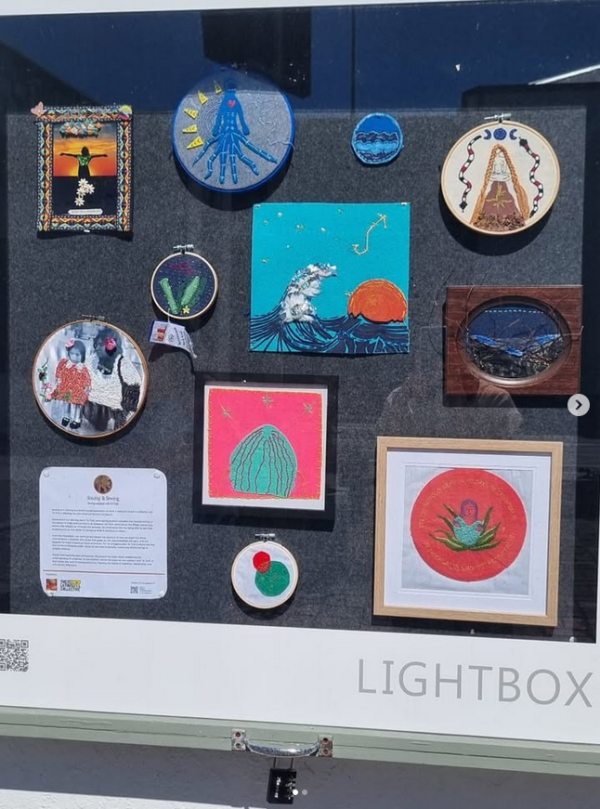
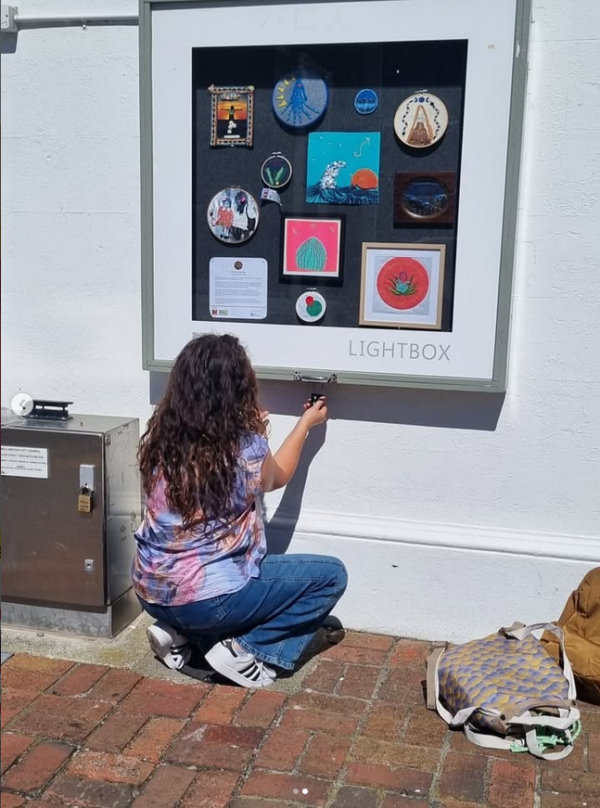
Sowing and Sewing is a textile-based exploration of what it means to stand in solidarity with Te Tiriti o Waitangi as Latin American tauiwi in Aotearoa. In February 2025, a group of Latin American women gathered at Kohunui Marae to learn about Te Tiriti. During our noho marae, we shared a bit of our history from the places we were born and the stories carried by our ancestors. We also traced parallels between the colonial history of our places of origin and the history of Aotearoa.
Over the following months, we worked with a creative framework that invited us to reflect on the things, places and stories that shaped us. We created textile pieces about what ground us and give us a sense of who we are: our land, people, food, stories, memories and yearnings. Through this process, we understood that by being able to see what is precious to us, it is easier to recognize what is precious to others. For us, engaging with Te Tiriti is about learning how to live in Aoteraoa under values of care and reciprocity, honouring what is taonga to tangata whenua and supporting tino rangatirantanga. We then turned our work toward the question of how we might live these commitments in practice: the value that guide us, the responsibilities we carry, and the legacies we hope to leave as future ancestors. These pieces here are the result of this work. Rather than reaching neat conclusions, this project has been about deepening our understanding of ourselves and the ways we can connect with Te Tiriti. The work of sowing, then,
continues: Planting the seeds of solidarity, relationship and care across differences.
Sowing and Sewing, Sembrar y Coser, is a group of Latin American women living in Aotearoa, who through textile and collaborative art, have been exploring our connections to and responsibilities from Te Tiriti o Waitangi as racialised tauiwi. We are mothers, students, workers, activists, teachers and volunteers… and much more. We have been in Aotearoa for over two decades, or only a few years. We come from diverse geographies and communities, and have had different trajectories of migration.
This project has been possible thanks to the work of OCA, Our Colours in Aotearoa, and The Latin Collective, as well as funding from the Ministry of Ethnic Communities and support from Te Herenga Waka Victoria University of Wellington.
CONTACT
Nibbled Edges
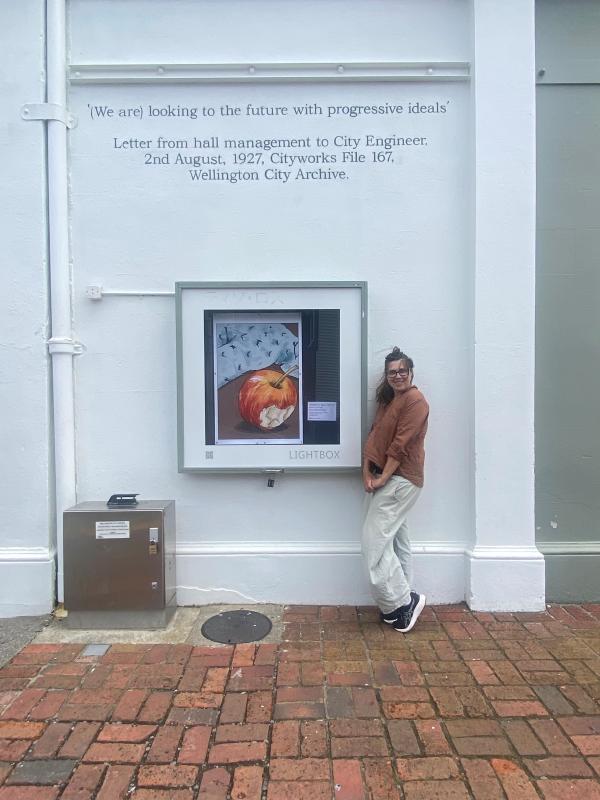
The extracts for this Thistle Lightbox, taken from Nibbled Edges, are a musing on parenthood. As parents, we find ourselves asking, how did we get here? Was this apple discarded or placed here in reverence? Is this half chewed apple a little love note for me to find, or a masterful show of dominance by my 4 year old? Such over thinking needs to be enjoyed and laughed at, before it gets the better of us all.
Emma’s latest book Nibbled Edges is a reduced version of the more elaborate deep-dive rabbit-holing of the isolation of parenthood in Mum Moments, a New Mum and it’s sequel Mum Moments, Two Too Many and focuses more on the relationships between two parents, and the bewildering objects we encounter.
All of Emma’s books may be found just down the road at Graphic, 105 Cuba Street, or Amazon
Fire brings us 2getha
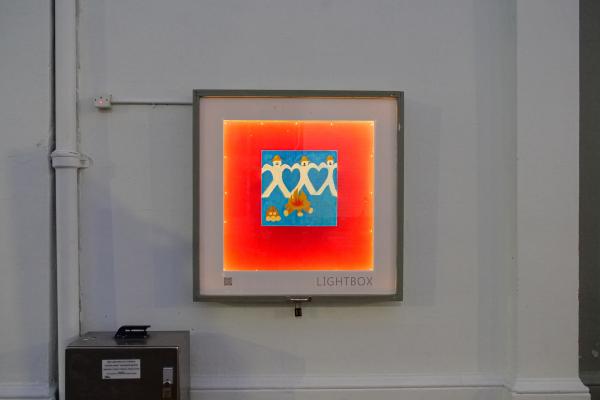
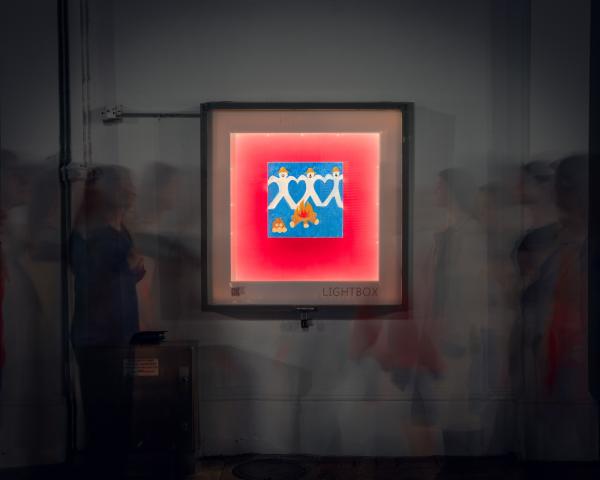
This piece explores community resilience through the invisible fabric of love. Fire in this instance suggests the warmth of care, but also the fuel of a united front, impassioned edges, and pure brightness within. Gittings uses a playful approach to colour, inspired by the Japanese and Korean artists; Mogu Takahashi and Kim Whanki. The audience is invited to consider who it is they are bound to by love, where the linkages leads, and how can you mobilise through care, to open the hearts into the pure brightness of light (fire).
Jackson Gittings is an artist and designer exploring the spaces of delicate experimentation through form. The Te Awanga raised, Pōneke based artist shares expression through self taught digital and physical painting forms that have been exhibited in Portugal, Australia, and here in Aotearoa.
Image by Maeve O’Connell
Walking in the Valley
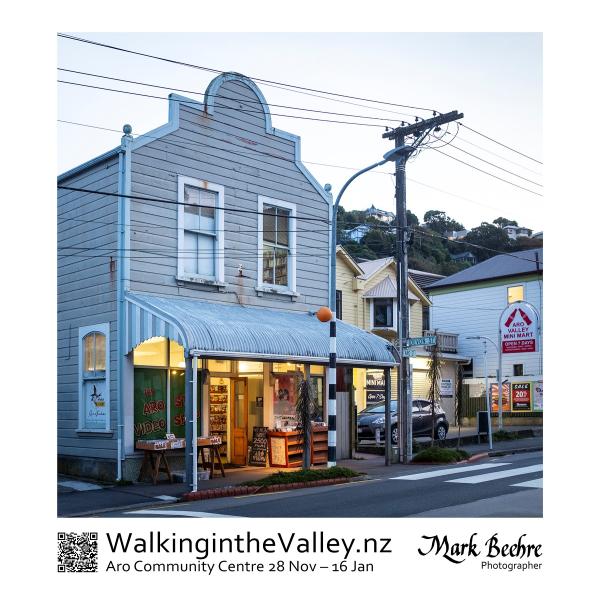
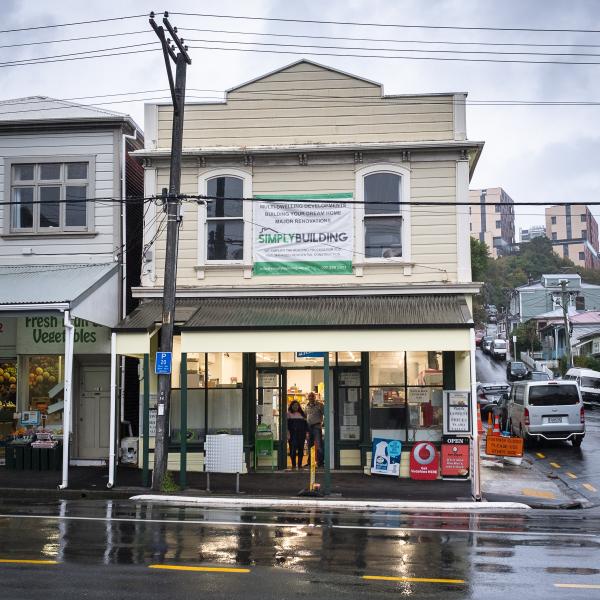
"Walking in the Valley had its origins as a purely personal, diaristic project. In 2017 I acquired a beautiful new camera, a Fujifilm X100T small enough to carry with me wherever I went, and began taking photographs of the streetscapes, houses and passers-by as I walked through on my way to the shops or the studio or work or the gym. After eight years of collecting images, I realised that my daily photo-diary had evolved into something worth sharing, and I started to put together this exhibition. Even after the first cut of images had been completed earlier this year, the valley continued to surprise me with new perspectives, and as I look back, the changes over time – a building repainted or replaced, a fence fallen down or another one built – are part of the fascination."
Mark Beehre's work sits at the intersection of documentary, portraiture and social history and is concerned with questions of identity, belonging and the life-long quest for intimacy. He is the author of Men Alone — Men Together (Steele Roberts, 2010) and A Queer Existence (Massey University Press, 2021), both of which incorporate photographic portraiture and oral history in telling the stories of two different cohorts of gay men who grew up before and after the Homosexual Law Reform Act was passed in 1986.
The exhibition is accompanied by an on-line competition organised by Sven Ericksen where anyone can submit their own photos of the valley. Visit www.walkinginthevalley.nz for details. For prints of any of the photos, visit www.markbeehre.co.nz/walking-in-the-valley-prints.
CONTACT
Email: silverimage@markbeehre.co.nz
Digital narrative . デジタル·ナラティブ
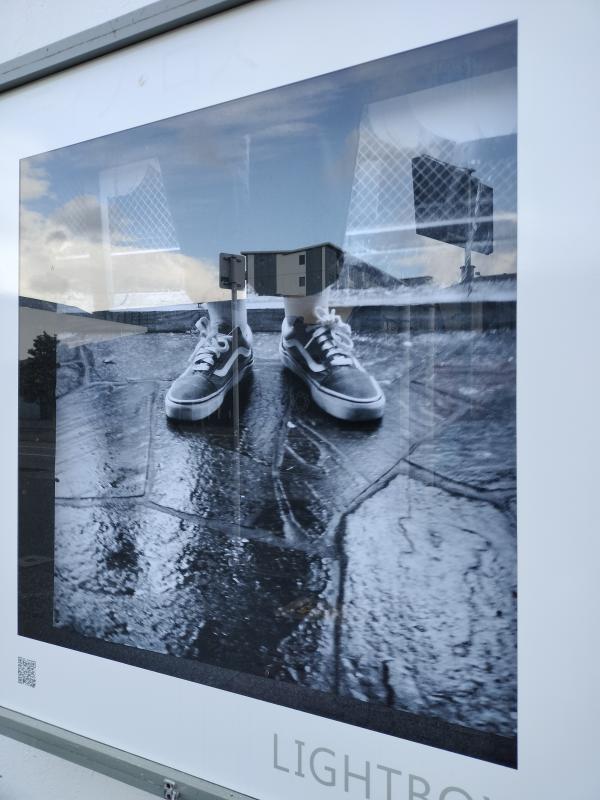
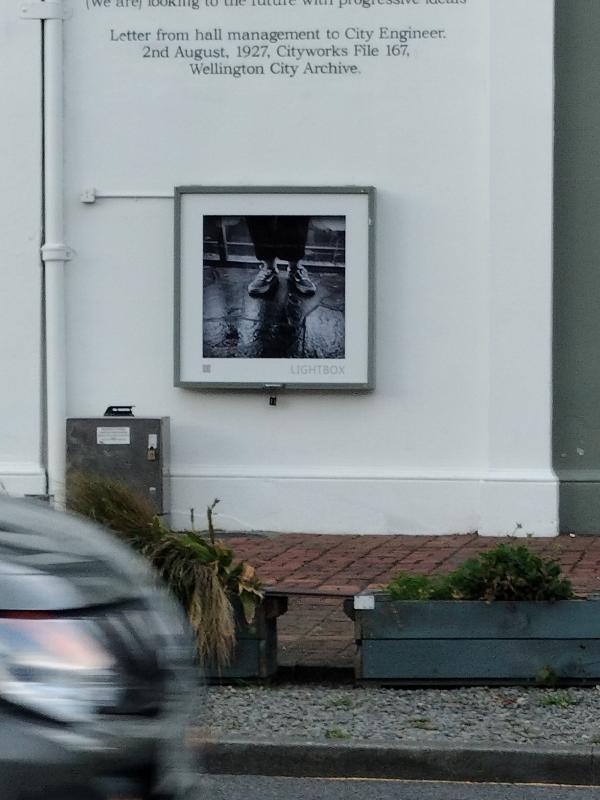
Tiso Ross is a current Postgraduate student from the Dunedin School of Art, Ōtepoti Dunedin, Aotearoa.
This series is a digital narrative consisting of 4 black and white photographic prints. The work is a response to time spent in Japan during September and October 2025. Although deviating from the earlier medium of ink drawing Tiso feels this series is an extension of the first graphic narrative. Her hope is that the work arranges space for reflection and connection when glimpsed by passersby.
Tiso lives in Motu Kairangi, Aotearoa New Zealand.
システル·ホール·ライトボックス
ティソ·ロスは、ニュージーランド、ダニーデンのオテポティにあるダニーデン美術学校の大学生です。
このシリーズは、4枚の白黒写真からなるデジタルナラティブです。これらの作品は、2025年の9月から10月にかけて日本で過ごした時に作成されました。以前のインクドローイングという作品とは異なりますが、ティソはこのシリーズが最初のグラフィックナラティブの延長線上にあると考えています。彼女は、この作品を通行人が目にした際、内省とつながりを生み出す空間となることを願っています。
ティソはニュージーランド、モツ·カイランギに住んでいます。
Images
Tiso Ross, Izakaya Kabu (居酒屋かぶ) 2025 10 04
I Miss You
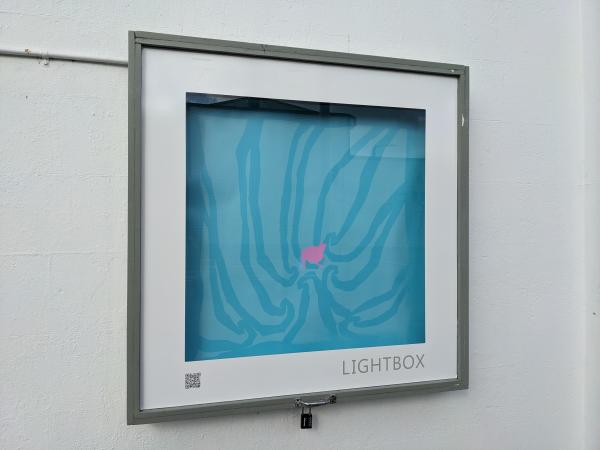
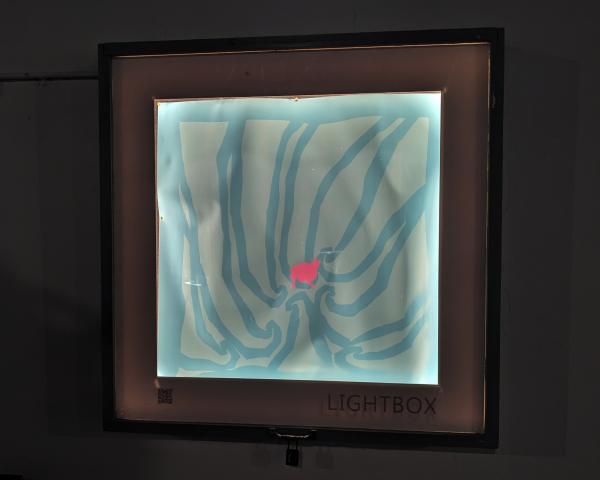
Tawhirimatea did not agree with the separation of his parents because he longed for his father. As a result he tore his eyes out and threw them into the sky. This is a contemporary take on telling that story. Using kowhaiwhai and the colour blue to show the sky or Ranginui and the komako as a depiction of Tawhirimatea sinking in his loneliness.
This work is about the importance of relationships and how they help us grow as people.
Instagram: @louismikaereart
Images
Louis Mikaere, I Miss You
Graphic Narrative . グラフィック·ナラティブ
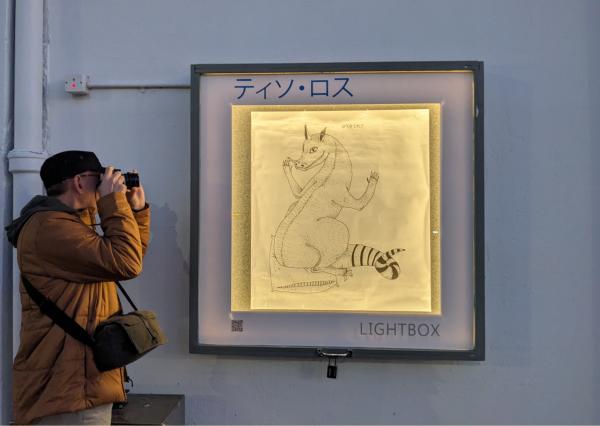
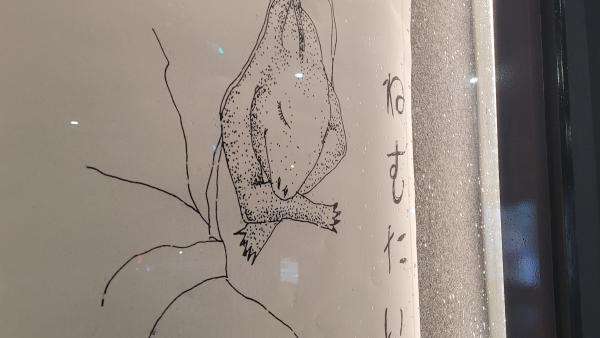
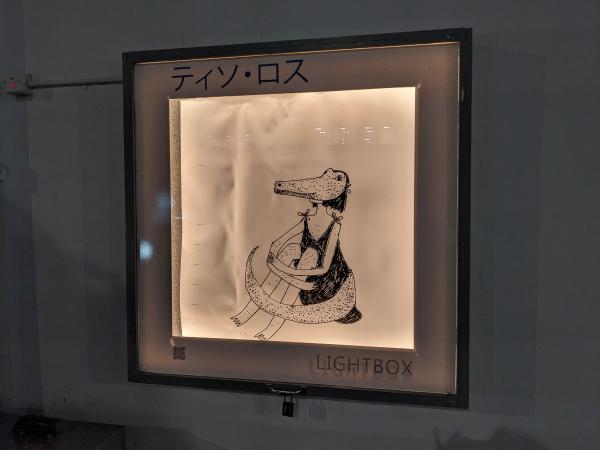
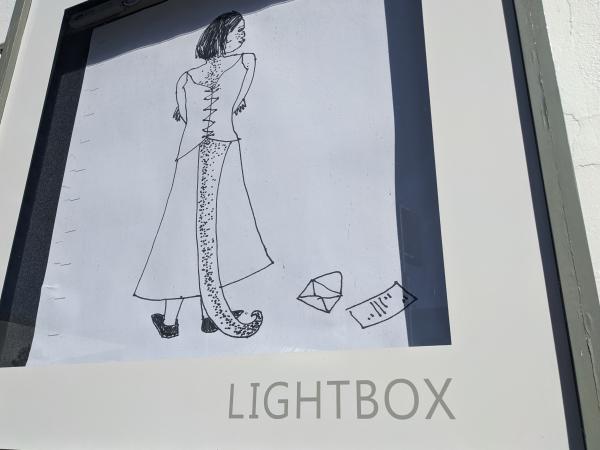
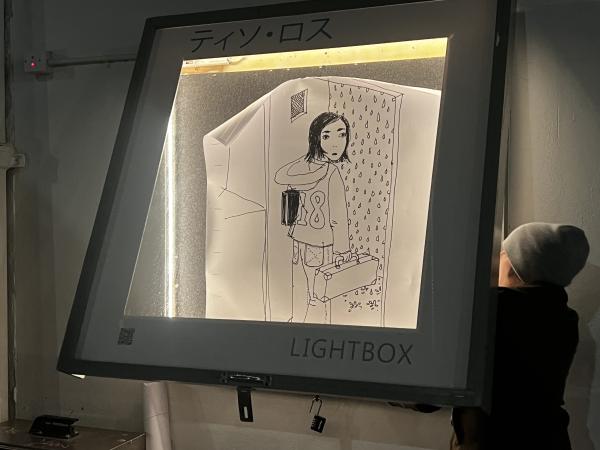
Tiso Ross is a DFA honors graduate from the Dunedin School of Art, Ōtepoti Dunedin, Aotearoa. Tiso worked in photographic, electronic art and illustration between 1992 and 2000 but has had a long ‘pause' from making or exhibiting until recently.
Tiso spent over a decade living in Japan where the body of this work being exhibited was created. Termed ‘graphic narratives’ by a friend, these works aim to arrange space for reflection and connection when glimpsed by passersby.
Tiso lives in Motu Kairangi, Aotearoa New Zealand.
システル·ホール·ライトボックス
ティソ·ロスは、ニュージーランド、ダニーデン(オテポティ)にあるダニーデン美術学校(DFA)を優秀な成績で卒業しました。1992年から2000年にかけて、写真、エレクトロニックアート、イラストレーションの分野で活動していましたが、最近まで制作や展示活動は長い間休止していました。
ティソは10年以上日本に住んでおり、そこで本展の作品が制作されました。
友人により「グラフィック·ナラティブ(物語)」と名付けたこれらの作品は、通りがかった人が見た時に、内省とつながりを生む空間を作り出すことを目的としています。
Images
Tiso Ross, Bikurishita, 4 - 10 August 2025
Tiso Ross, Nemutai deshyo, detail, 11 - 17 August 2025
Tiso Ross, Wani no warau, detail, 18 - 24 August 2025
Tiso Ross, Tegami, 25 - 31 August 2025
Tiso Ross, Doushaburi, 1 - 7 September 2025